

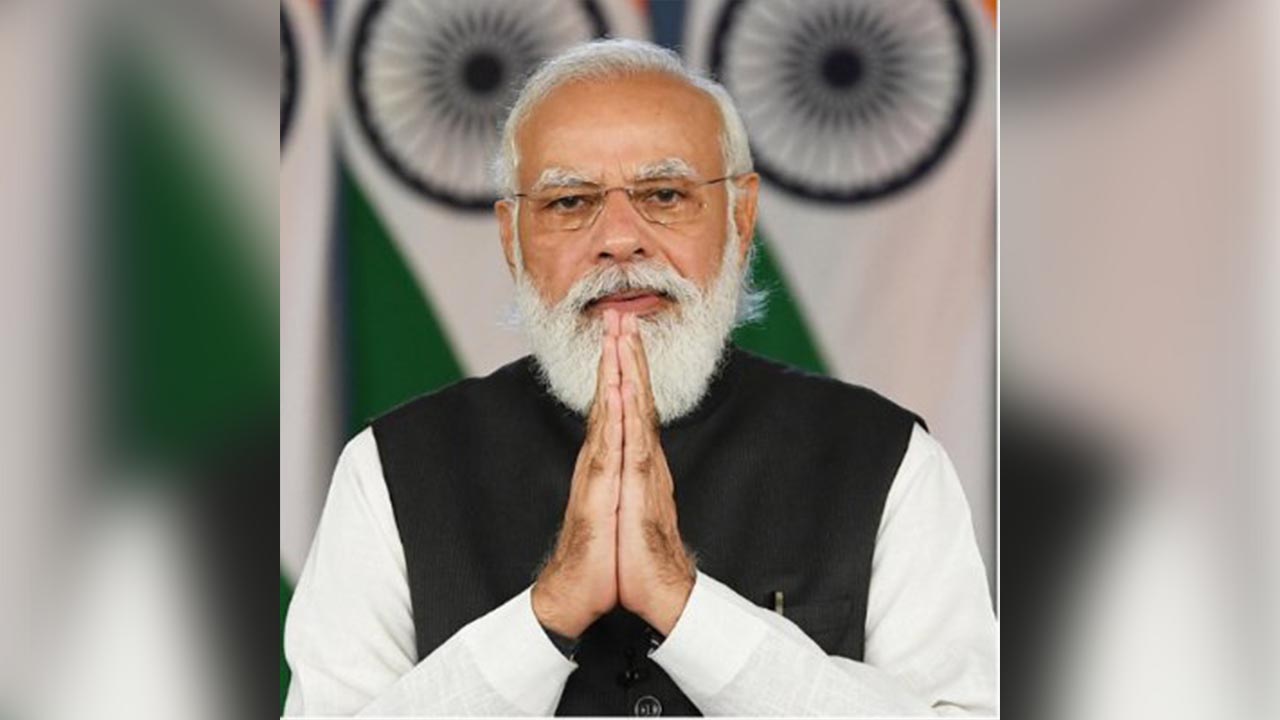
New Delhi: Emphasizing the principle of ‘Vasudhaiva Kutumbakam,’ which translates to ‘the world is one family,’ Prime Minister Narendra Modi conveyed on Thursday that this philosophy advocates for our collective progress as a united global family, transcending geographical boundaries, linguistic differences, and ideological distinctions.
“During India’s tenure as the G20 Presidency, this concept has materialized into a resounding call for a human-centric approach to development. Under the banner of One Earth, we are joining hands to nurture our planet. As One Family, we extend our support to each other in the pursuit of growth. Together, we are marching towards a shared future—a One Future—which has become an undeniable reality in this era of heightened interconnectivity,” he remarked, underscoring the profound transformation brought about by the post-pandemic world order.
The Prime Minister outlined three pivotal shifts in this new landscape, among other noteworthy changes. “Firstly, there is a growing recognition of the need to shift from a GDP-centric perspective to a human-centric outlook on the world. Secondly, the world is awakening to the significance of resilience and reliability within global supply chains. Thirdly, there is a collective call for enhancing multilateralism through the reform of global institutions,” said the Prime Minister proudly stating that India’s G20 Presidency has acted as a catalyst in propelling these transformative shifts forward.
“In December 2022, as India assumed the Presidency from Indonesia, I emphasized the imperative need for a transformative shift in mindset within the G20. This shift was particularly vital for advancing the aspirations of marginalized nations, encompassing the developing world, the Global South, and Africa,” stated Prime Minister Modi.
He highlighted the Voice of Global South Summit, which boasted participation from 125 countries, as a pivotal initiative during India’s Presidency. “This summit served as a crucial platform for gathering insights and ideas from the Global South. Moreover, our Presidency has not only witnessed the largest-ever representation of African nations but has also advocated for the inclusion of the African Union as a permanent member of the G20,” he further elaborated.
“In today’s interconnected world, our challenges span multiple domains, intricately linked to one another. As we find ourselves at the midpoint of the 2030 Agenda, concerns have arisen about the lack of progress towards achieving the Sustainable Development Goals (SDGs). The G20 2023 Action Plan, dedicated to expediting SDG advancement, will chart the course for the G20’s commitment to SDG implementation,” the Prime Minister underscored.
He added that India has a longstanding tradition of living in harmony with nature, dating back to ancient times, and continues to make meaningful contributions to climate action in the contemporary world.
Prime Minister Narendra Modi emphasized the importance of climate action, recognizing that many countries in the Global South are at different stages of development. He stressed the need for climate action to complement development efforts and emphasized that ambitions for climate action must be accompanied by concrete actions related to climate finance and technology transfer.
Modi advocated for a shift in attitude, moving away from a purely restrictive approach towards climate change and focusing on constructive strategies to combat it. He highlighted the significance of the Chennai High-Level Principles for a Sustainable and Resilient Blue Economy, emphasizing the importance of maintaining healthy oceans.
Under India’s leadership, a global ecosystem for clean and green hydrogen was set to emerge, alongside the establishment of a Green Hydrogen Innovation Centre. Modi also mentioned India’s commitment to promoting renewable energy through initiatives like the International Solar Alliance and the Global Biofuels Alliance.
The Prime Minister stressed the importance of democratizing climate action, comparing it to individual decisions for long-term health. He introduced the concept of “Lifestyles for Sustainable Environment (LiFE)” as a way to inspire sustainable choices on a global scale.
Food and nutritional security were highlighted as crucial in the face of climate change, with a focus on millets and climate-smart agriculture. The International Year of Millets and the Deccan High-Level Principles on Food Security and Nutrition were referenced as important steps in this direction.
Modi acknowledged the transformative power of technology but emphasized the need for inclusivity. He highlighted India’s efforts to leverage technology to narrow inequalities and promote inclusive growth, citing digital public infrastructure (DPI) as a means to financially include the unbanked.
Women’s empowerment and leadership in various sectors were recognized, with a focus on bridging the gender digital divide and enabling greater participation of women in leadership roles.
The Prime Minister emphasized that India’s G20 Presidency was not just a diplomatic endeavor but a reflection of India’s values of democracy and diversity. He highlighted the extensive reach of the G20 Presidency, with numerous meetings held across India, hosting delegates from around the world.
Modi concluded by stating that India’s G20 Presidency aimed to bridge divides, dismantle barriers, and promote collaboration on a global scale. He expressed confidence that their actions matched their pledge to make the global table larger and ensure that every voice and country had a role to play in shaping the future.