


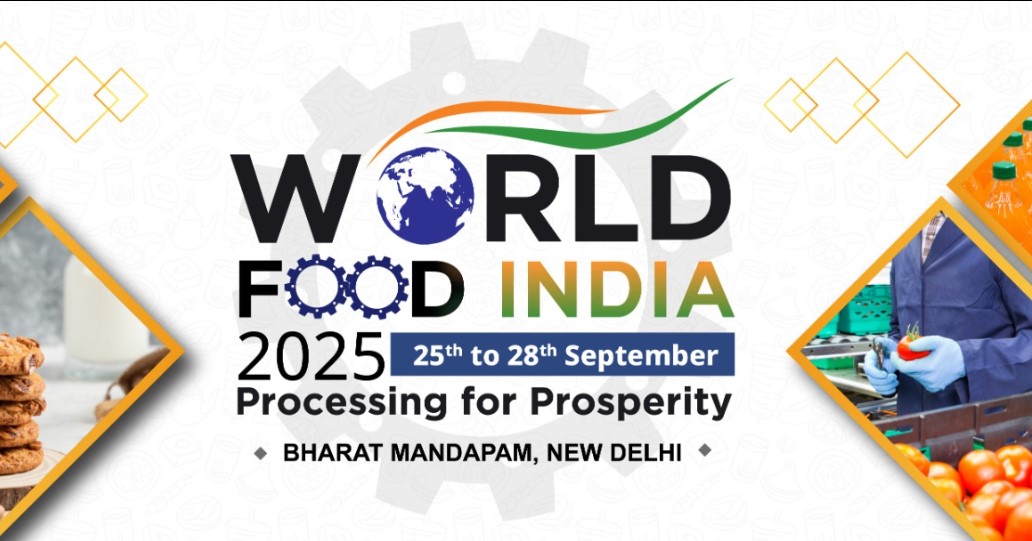
New Delhi: The curtains came down today on World Food India 2025 at Bharat Mandapam, Pragati Maidan, in what has been described as a landmark event for the country’s food processing sector. Over 95,000 visitors – including global leaders, policymakers, business heads, and food innovators – gathered across four days to discuss the future of food and agriculture.
The mega event was inaugurated by the Prime Minister of India alongside Russia’s Deputy Prime Minister Dmitry Patrushev, and Union Ministers Chirag Paswan and Prataprao Jadhav, with Ravneet Singh, Minister of State for Food Processing and Railways, also present.
Prime Minister’s Big Push
In his opening address, the Prime Minister underlined India’s growing stature as a reliable supplier to the world. He spoke of India’s rich agricultural diversity, its rising middle-class demand, and enabling policies like 100% FDI in food processing, the PLI scheme, and Mega Food Parks.
He also released credit-linked subsidies worth ₹2,518 crore to benefit 26,000 small entrepreneurs under the PMFME scheme – a move that reinforces the government’s intent to support grassroots businesses in the food sector.
Record Investments and Partnerships
World Food India 2025 proved to be a major investment magnet, with MoUs worth more than ₹1,02,000 crore signed – one of the biggest commitments ever seen in the sector. The Ministry of Food Processing Industries also forged collaborations with leading institutes like NIFTEM-T and NIFTEM-K, paving the way for advancements in food fortification, nutraceuticals, and start-up incubation.
The CEO Roundtable, co-chaired by Nitin Gadkari and Chirag Paswan, saw over 100 top CEOs from India and abroad come together. Their discussions focused on sustainable investments, biodegradable packaging, waste valorisation, the blue economy, and cutting costs in logistics and transport to make Indian food globally competitive.
Strong International Participation
Government-to-government dialogues gave the event a strong international flavour. Delegations from Russia, Sri Lanka, Morocco, Maldives, Portugal, New Zealand, Zimbabwe, Uganda, Eswatini, Côte d’Ivoire, and Kuwait held talks with India, looking at ways to deepen cooperation in food processing and agriculture.
These conversations added weight to India’s role as a trusted partner in global agri-food supply chains.
Knowledge Sessions and Regulatory Debates
The technical side of the summit was equally power-packed, with over 40 sessions conducted by partner states, ministries, global organisations, and industry bodies. Topics ranged from pet food, nutraceuticals, plant-based diets, and speciality foods, to the future of alcoholic beverages.
A key highlight was the 3rd Global Food Regulators Summit, which discussed digital tools for risk management, modern regulatory skills, food safety partnerships, and nutrition-led strategies to tackle lifestyle diseases like obesity.
Business Buzz and Seafood Spotlight
The event was a hive of activity with 10,500 B2B meetings, 261 government-to-government interactions, and more than 18,000 reverse buyer-seller meets taking place.
Running parallel to the summit, the 24th India International Seafood Show was inaugurated on 25th September by Union Minister Chirag Paswan. Organised by the Marine Products Export Development Authority, it focused on boosting India’s seafood exports, featuring industry talks, technical sessions, and buyer-seller meets.
Looking Ahead
With its record-breaking investment deals, robust global partnerships, and strong focus on sustainability and innovation, World Food India 2025 has underlined India’s ambition to become a world leader in agri-food value chains.
The event has set a strong foundation for the country’s food processing sector – one that is increasingly geared towards global collaboration, technological innovation, and sustainable practices.