


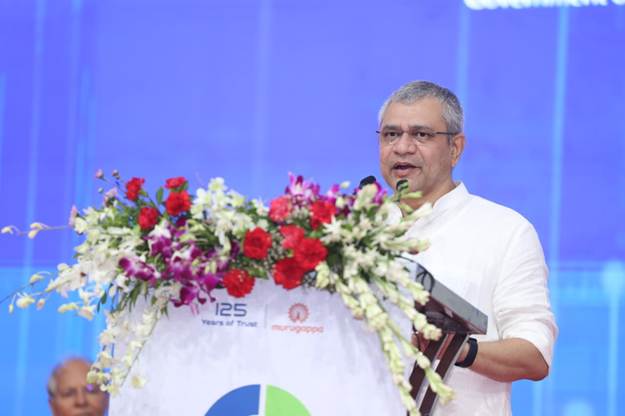
Bhubaneswar: In a major push to India’s semiconductor mission, the Union Minister for Electronics and Information Technology, Shri Ashwini Vaishnaw, has approved the establishment of the NaMo Semiconductor Laboratory at the Indian Institute of Technology (IIT) Bhubaneswar. The initiative, with an estimated project cost of ₹4.95 crore, will be funded under the Members of Parliament Local Area Development (MPLAD) Scheme.
The new lab is expected to become a cornerstone in building a deep talent pool for India’s rapidly expanding semiconductor ecosystem. By equipping students with industry-ready skills in chip design, manufacturing, and packaging, the NaMo Semiconductor Lab will not only strengthen IIT Bhubaneswar’s role as a research hub but also position it as a key player in nurturing the country’s next generation of semiconductor professionals.
This development aligns with the government’s ‘Make in India’ and ‘Design in India’ initiatives, aiming to transform the nation into a global semiconductor powerhouse. With Bharat already contributing nearly 20% of the world’s chip design talent, the new lab will serve as a catalyst for innovation, research, and entrepreneurship in the semiconductor domain.
Across India, 295 universities are now leveraging advanced Electronic Design Automation (EDA) tools, and 28 student-designed chips from 20 institutes have already been successfully taped out at SCL Mohali — signalling a growing domestic capacity in chip development.
Why IIT Bhubaneswar?
Odisha has emerged as a rising hub in India’s semiconductor landscape. The state has recently secured approval for two major semiconductor projects under the India Semiconductor Mission — one for an integrated Silicon Carbide (SiC)-based compound semiconductor facility and another for advanced 3D glass packaging. IIT Bhubaneswar, already home to the Silicon Carbide Research and Innovation Centre (SiCRIC), offers the perfect foundation for this new lab with its cleanroom infrastructure and ongoing R&D efforts.
Inside the NaMo Semiconductor Lab
The proposed lab will be equipped with state-of-the-art tools and software required for semiconductor training, design, and fabrication. Of the total project cost, ₹4.6 crore will be allocated for high-end equipment and ₹35 lakh for software procurement.
Once operational, the NaMo Semiconductor Lab is expected to significantly strengthen India’s semiconductor capabilities — nurturing skilled professionals, supporting research, and accelerating the nation’s journey towards technological self-reliance.