


New Delhi: The Ministry of Electronics and Information Technology (MeitY) has notified a ₹62,500 crore Mobile Phone Manufacturing Scheme (MPMS) aimed at expanding production, increasing domestic value addition and strengthening Indian-owned mobile brands, intellectual property and design capabilities.
The five-year scheme will run from FY 2026-27 to FY 2030-31 and is expected to generate around 60,000 direct jobs. The government estimates cumulative mobile phone production of about ₹39 lakh crore during the scheme period, alongside an increase in exports.
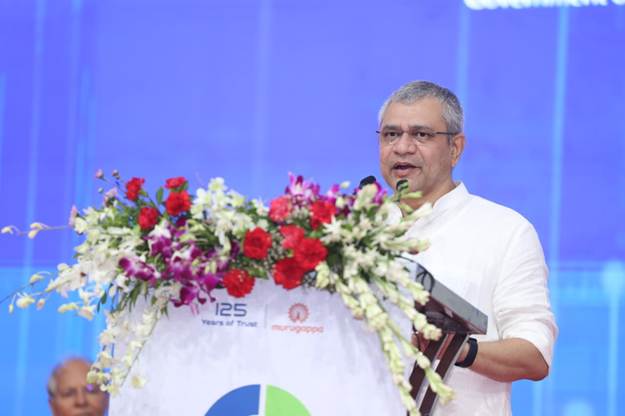
Union Electronics and Information Technology Minister Ashwini Vaishnaw said the scheme would support the development of Indian-owned mobile brands, intellectual property and design. He stressed that brands seeking support as Indian companies must have genuinely Indian-owned design and intellectual property and be capable of competing with leading products in their market segments.
Vaishnaw said the government would closely examine whether intellectual property claimed by applicants was genuinely Indian-owned. Non-fiscal and other support measures would also be developed in consultation with the industry.
Two segments under mobile phone manufacturing scheme
The MPMS has two target segments. Target Segment 1, or TS1, is designed to incentivise mobile phone manufacturing, while Target Segment 2, or TS2, will support Indian mobile phone brands.
Under TS1, eligible companies will receive differentiated incentives ranging from 2.25% to 5%. Under TS2, Indian brands will receive a 5% incentive, with an additional 3% available for Indian design and research and development.
Applicants under TS2 may also be given a one-year gestation period. The scheme provides non-fiscal support for Indian brands as well.
Both categories can receive an additional incentive of up to 1.5% for sourcing key components and sub-assemblies domestically. To qualify, locally sourced components must be used in at least 25% of the total mobile phone units manufactured during a financial year.
Mobile phone manufacturers and Electronics Manufacturing Services (EMS) providers registered in India can apply under the scheme. Sales and incentives will be calculated separately for each brand.
Eligibility criteria for manufacturers and Indian brands
For TS1, mobile phone manufacturers and EMS companies must be registered in India and have a minimum turnover of ₹10,000 crore in FY 2025-26.
Existing brands will have to achieve annual threshold sales of ₹5,000 crore each year over and above their FY 2025-26 sales. A new brand will become eligible only after reaching annual sales of ₹10,000 crore in India and will subsequently have to meet the year-on-year threshold of ₹5,000 crore.
Under TS2, applicants must have a minimum turnover of ₹1,000 crore in FY 2025-26 and meet all the conditions prescribed for an Indian brand.
These include being registered or incorporated in India, holding intellectual property and trademarks within the country, having management control with Indian citizens and more than 51% shareholding held by Indian citizens. Applicants must also have in-house research, development and design capabilities in India.
Scheme follows end of mobile phone PLI programme
The new scheme follows the Production Linked Incentive Scheme for Large Scale Electronics Manufacturing, or PLI-LSEM, which ended on March 31, 2026.
According to the government, electronics manufacturing in India has grown seven-fold since FY 2014-15, while exports have increased eleven-fold. Mobile phone manufacturing has been a major contributor to this expansion.
India is now the world’s second-largest mobile phone manufacturer by volume, with 99.2% of mobile phones used in the country made in India, according to the government. Smartphones also became India’s single-largest exported product category in 2025, surpassing products such as diesel fuel and cut diamonds.
The government expects the MPMS to build on this growth by increasing domestic sourcing, supporting Indian-owned brands and expanding India’s role in global mobile phone manufacturing.