

New Delhi: As the country gears up for a busy election season, the Election Commission of India has rolled out a simple way for voters to know more about candidates before casting their vote.
The Commission had earlier announced the schedule for the General Elections to the Legislative Assemblies of Assam, Kerala, Puducherry, Tamil Nadu and West Bengal, along with bye-elections to eight Assembly constituencies across Goa, Gujarat, Karnataka, Maharashtra, Nagaland and Tripura on March 15, 2026.
Polling for some of these seats is set for April 9, 2026, where a total of 1,955 candidates are contesting elections in Assam, Kerala, Puducherry and select bye-election constituencies.
Meanwhile, the nomination process is underway for West Bengal (Phase I and II) and Tamil Nadu. The last date for withdrawal of candidature is April 9 for Tamil Nadu and West Bengal (Phase I), while candidates in West Bengal (Phase II) can withdraw till April 13.
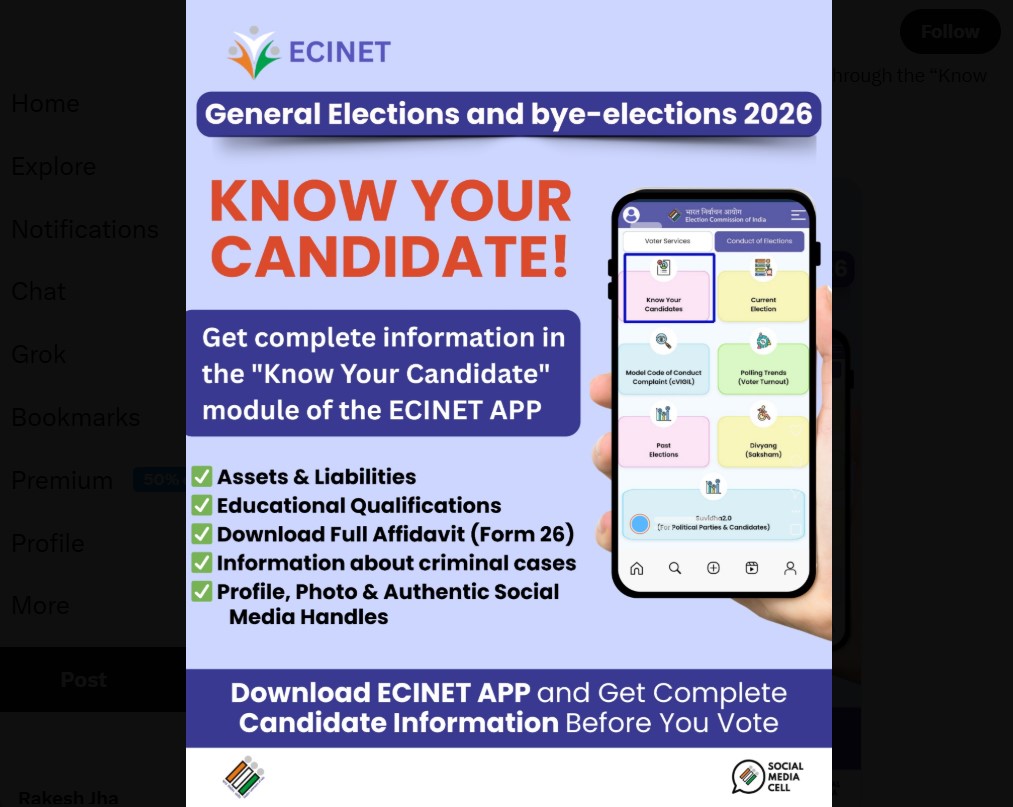
In a major step towards transparency, voters can now use the “Know Your Candidates” (KYC) module available on the ECINET platform. This feature allows citizens to check key details about candidates, including their criminal cases, assets and liabilities, educational qualifications, and even their verified social media handles.
The KYC module can be accessed under the “Conduct of Elections” section on ECINET. Voters can also download the complete affidavit (Form 26) submitted by candidates, making it easier to verify information directly.
ECINET, described as the world’s largest electoral service platform, brings together over 40 apps and portals of the Election Commission into one unified system. It aims to simplify access to electoral services for voters across the country.
Apart from candidate information, ECINET offers a range of services including voter registration, electoral roll search, tracking applications, connecting with election officials, booking calls with Booth Level Officers, downloading e-EPIC, checking polling trends, and lodging complaints.
The platform also integrates tools like cVIGIL for reporting violations and Saksham to support accessible services for persons with disabilities, ensuring a smoother and more transparent election experience for all.