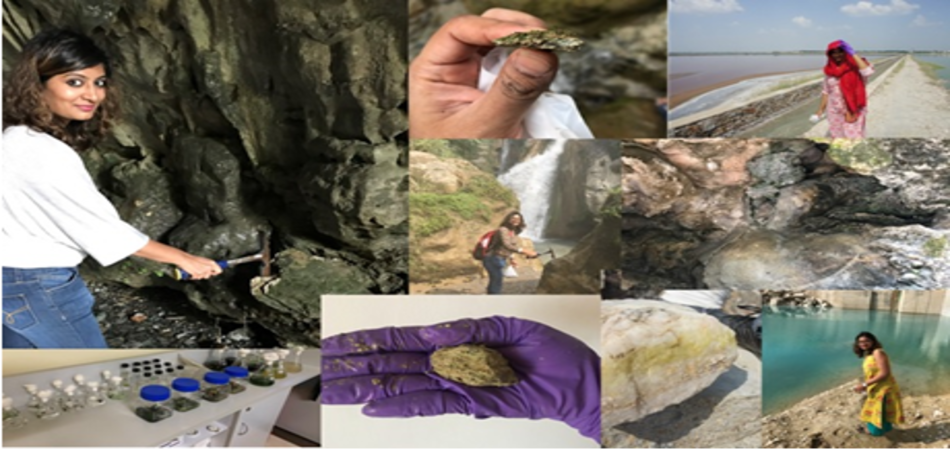
Carbonates, significant in the global carbon cycle, drew the interest of geoscientists, biologists, and climatologists. Dr. Singh focused on photosynthetic cyanobacteria and microalgae in carbonate-dominated environments like carbonate rocks and soda lakes. These microorganisms hold key insights into biogeochemistry, microbial diversity, evolution of life, astrobiology, environmental sustainability, and biotechnology.
The research delved into the resilience of P. salinarum, found in the Sambhar Lake for the first time in India. Dr. Singh’s team probed molecular mechanisms through high-throughput label-free quantitation based quantitative proteomics, providing the first insights into the proteome of P. salinarum. The study revealed tailored regulatory mechanisms for osmotic adaptation and proliferation in polyextreme conditions, unveiling the basis of resilience in this lesser-known organism.
The alga enhances photosynthesis and ATP synthesis along with chaperone proteins in response to high salinity-alkalinity. This discovery, published in Frontiers in Microbiology, positions P. salinarum as a promising candidate for biotechnological applications and a model organism for deciphering molecular mechanisms of osmotic adaptation. The research also contributes to bicarbonate-based integrated carbon capture and biomass production. Dr. Singh’s work could advance sustainable and resource-efficient biotechnological processes.
Link to Publication



 Microscopic view of Picocystis Salinarum thriving in saline-alkaline conditions