


New Delhi: The recently announced Goods and Services Tax (GST) revisions have been described as a watershed moment for India’s agriculture and dairy sectors. The sweeping changes, which ease tax burdens across key inputs and commodities, have been met with widespread appreciation from farmers, dairy workers, livestock owners, and allied communities nationwide.
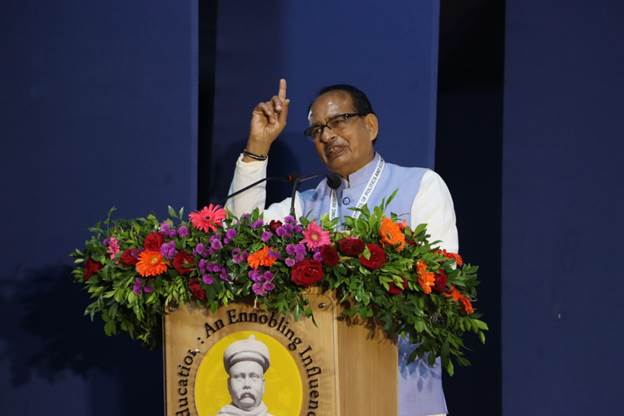
Union Agriculture Minister Shivraj Singh Chouhan hailed the reforms as a “revolutionary decision,” expressing optimism that the move would usher in historic improvements for rural livelihoods and the farming economy. Farmers and stakeholders have also expressed gratitude to Prime Minister Narendra Modi and Union Finance Minister Smt. Nirmala Sitharaman for spearheading the initiative.
Benefits for Farmers and Agriculture
Small and medium-scale farmers are expected to be the biggest beneficiaries of the reduced GST rates. Lower taxation on agricultural machinery and solar-powered equipment will cut operational costs and boost profitability. Similarly, reduced GST on bio-pesticides and micronutrients is set to encourage a gradual shift from chemical fertilisers to bio-based alternatives, supporting sustainable farming practices.
The reforms also extend to integrated farming systems, creating fresh opportunities in animal husbandry, beekeeping, fisheries, agroforestry, and poultry. This holistic approach is designed to strengthen rural incomes and promote resilience across agricultural ecosystems.
Dairy and Tribal Livelihoods Gain
In the dairy sector, the removal of GST on milk and cheese will provide relief to both producers and consumers, while ensuring higher margins for dairy farmers and livestock owners. By reducing costs, the government aims to make essential dairy products more affordable and nutrition-rich for households.
The reforms further address tribal livelihoods, with lower GST on tendu leaves expected to directly benefit forest-dependent communities engaged in their collection and trade.
Cheaper Logistics and Market Access
A major boost also comes from reduced GST on commercial goods vehicles, which will lower transportation costs for farm produce. This measure is anticipated to improve farm-to-market access, reduce wastage, and strengthen competitiveness in rural supply chains.
Overall, the GST restructuring is being positioned as a long-term enabler of rural prosperity, setting the stage for structural changes in India’s agricultural and dairy economy.
Prices Down, Profits Up
| Tractor prices to reduce |
| Tractor parts to get cheaper |
| Agricultural equipment to become more affordable |
| Solar-powered irrigation devices will get cheaper |
| Fertilisers to cost less |
| Pesticides to get cheaper |
| Fruits and vegetables will get cheaper |
| Nuts to cost less |
| Boost to food processing |
| No GST on milk and cheese |
| Promotion of indigenous products |
| GST reduced on ‘prepared/preserved fish’ |
| Natural honey to cost less |
| Reduced GST on tendu leaves |
Detailed impact of GST cuts on various sectors
Agricultural Mechanisation
- GST on tractors (<1800 cc) reduced to 5%.
- Tractor parts, including tyres, tubes, hydraulic pumps: GST cut from 18% to 5%.
- Sprinklers, drip irrigation, harvesting machinery, tractor parts: GST cut from 12% to 5%.
- Fixed speed diesel engines (>15 HP), threshing/harvesting machines, compost machines: GST cut from 12% to 5%.
- Lower tractor prices will make mechanisation accessible to small and medium farmers, saving time, reducing labour costs, and improving productivity.
| OLD AND NEW GST DIFFERENCE CALCULATION FOR VARIOUS SOME OF THE POPULAR AGRICULTURAL MACHINERY & EQUIPMENTS :- | |||||||
| Sl.No. | Name of Agricultural Machinery & Equipment | Basic cost of Agricultural Machinery & Equipment (Rs.) | Present GST rate @ 12 %
(Rs.) |
Total Cost with 12% GST
(Rs.) |
Upcoming Revised GST rate @ 5%
(Rs.) |
Total cost with revised GST @ 5%
(Rs.) |
Saving
(Rs.) |
|
|
Tractor 35 HP | 5,80,000 | 69,600 | 6,50,000 | 29,000 | 6,09,000 | 41,000 |
|
|
Tractor 45 HP | 6,43,000 | 77,160 | 7,20,000 | 32,150 | 6,75,000 | 45,000 |
|
|
Tractor 50 HP | 7,59.000 | 91,080 | 8,50,000 | 37,950 | 7,97,000 | 53,000 |
|
|
Tractor 75 HP | 8,93,000 | 1,07,160 | 10,00,000 | 44,650 | 9,37,000 | 63,000 |
|
|
Power Tiller 13 HP | 1,69,643 | 20,357 | 1,90,000 | 8,482 | 1,78,125 | 11,875 |
|
|
Paddy Transplanter- 4 row walk behind | 2,20,000 | 26,400 | 2,46,400 | 11,000 | 2,31,000 | 15,400 |
|
|
Multicrop Thresher – 4 tone/ hr capacity | 2,00,000 | 24,000 | 2,24,000 | 1,0000 | 2,10,000 | 14,000 |
|
|
Power weeder – 7.5 hp | 78,500 | 9,420 | 87,920 | 3,925 | 82,425 | 5,495 |
|
|
Trailer 5 tone capacity | 1,50,000 | 18,000 | 1,68,000 | 7,500 | 1,57,500 | 10,500 |
|
|
Seed Cum Fertilizer Drill – 11 tyne | 46,000 | 5,520 | 51,520 | 2,300 | 48,300 | 3,220 |
|
|
Seed cum Fertiliser Drill – 13 Tine | 62,500 | 7,500.00 | 70,000 | 3,125.00 | 65,625 | 4,375 |
|
|
Harvester Combine 14 feet Cutter Bar |
26,78,571 | 3,21,428 | 30,00,000 | 1,33,928 | 28,12,500 | 1,87,500 |
|
|
Straw Reaper 5 feet |
3,12,500 | 37,500. | 3,50,000 | 15,625 | 3,28,125 | 21,875 |
|
|
Super Seeder 8 Feet |
2,41,071 | 28,928.57 | 2,70,000 | 12,053 | 2,53,125 | 16,875 |
|
|
Happy Seeder 10 Tine |
1,51,786 | 18,214 | 1,70,000 | 7,589.29 | 1,59,375 | 10,625 |
|
|
Rotavator 6 Feet |
1,11,607 | 13,392 | 1,25,000 | 5,580 | 1,17,187 | 7,812 |
|
|
Baler Square 6 feet |
13,39,286 | 1,60,714 | 15,00,000 | 66,964 | 14,06,250 | 93,750 |
|
|
Mulcher 8 Feet |
1,65,179 | 19,821 | 1,85,000 | 8,258 | 1,73,437 | 11,562 |
|
|
Pneumatic Planter 4 Row |
4,68,750 | 56,250 | 5,25,000 | 23,437 | 4,92,187 | 32,812 |
|
|
Sprayer Tractor Mounted 400 Liter capacity |
1,33,929 | 16,071 | 1,50,000 | 6,696 | 1,40,625 | 9,375 |
Fertilisers
- Ammonia, sulfuric acid, nitric acid: GST reduced from 18% to 5%.
- Reduction in rates will correct the inverted duty structure for fertiliser production.
Bio-Pesticides and Micronutrients
- 12 bio-pesticides and several micronutrients: GST cut from 12% to 5%.
- Bio-based inputs made more affordable, promoting eco-friendly and sustainable agriculture.
- Encourage farmers to shift from chemical pesticides to bio-pesticides, improving soil health and crop quality.
- Direct benefit to small organic farmers and FPOs under the government’s National Mission on Natural Farming.
Fruits, Vegetables and Food Processing
- Prepared/preserved vegetables, fruits, nuts: GST reduced from 12% to 5%.
- Boost to cold storage, food processing, and value addition.
- Reduction in wastage of perishables, ensuring farmers get better prices.
- Promoting export of processed food, strengthening India’s position as an agri-export hub.
Dairy Sector
- No GST on milk and cheese.
- GST on butter, ghee, etc., cut from 12% to 5%.
- Dairy farmers’ products made more competitive
- Milk cans (iron/steel/aluminum) now at 5% instead of 12%.
- Boost to indigenous dairy products.
Aquaculture
- GST on ‘prepared or preserved fish’ reduced from 12% to 5%.
- Likely to encourage aquaculture and fish farming nationwide.
Honey
- GST reduced on natural honey, benefitting beekeepers, tribal communities, and rural SHGs.
- GST on artificial honey (whether blended with natural or not) cut from 18% to 5%.
Solar-Powered Equipment
- GST on solar-powered devices reduced from 12% to 5%.
- Affordable solar equipment will lower irrigation costs, helping farmers.
Tendu Leaves
- GST reduced from 18% to 5%.
- As tendu leaves are a key source of income for farmers and tribals in Odisha, Madhya Pradesh, and Chhattisgarh, this cut will strengthen livelihoods in these states.
On the whole, the GST rationalization in agriculture is a farmer-friendly, pro-rural, and pro-sustainability reform — lowering costs for farmers, boosting cooperatives and FPOs, and strengthening food security. The boost in agriculture will happen at a multi-layered level and also to all its allied activities. The farm productivity will increase thanks to reduced fertilizer costs, the cold storage and Agri-processing will gain, and mechanization will increase in farming. In addition to all this, aqua culture, dairy farming and co-operatives involved in the same will become more profitable. The follow-on effect of the above will make us more competitive against imported food products and packaged foods. Our domestic food production would be more competitive compared to imports of food items, in order to become Atmanirbhar.