


With a composite score of 67.8, Odisha ranks highest in fiscal health, followed by Chhattisgarh (55.2) and Goa (53.6). Achiever states exhibit strong fiscal performance in revenue mobilisation, expenditure management, and debt sustainability. Notable improvements are seen in Jharkhand, while Karnataka faces challenges in expenditure quality and debt management. These disparities underscore the need for targeted reforms to address specific challenges and foster sustainable growth.
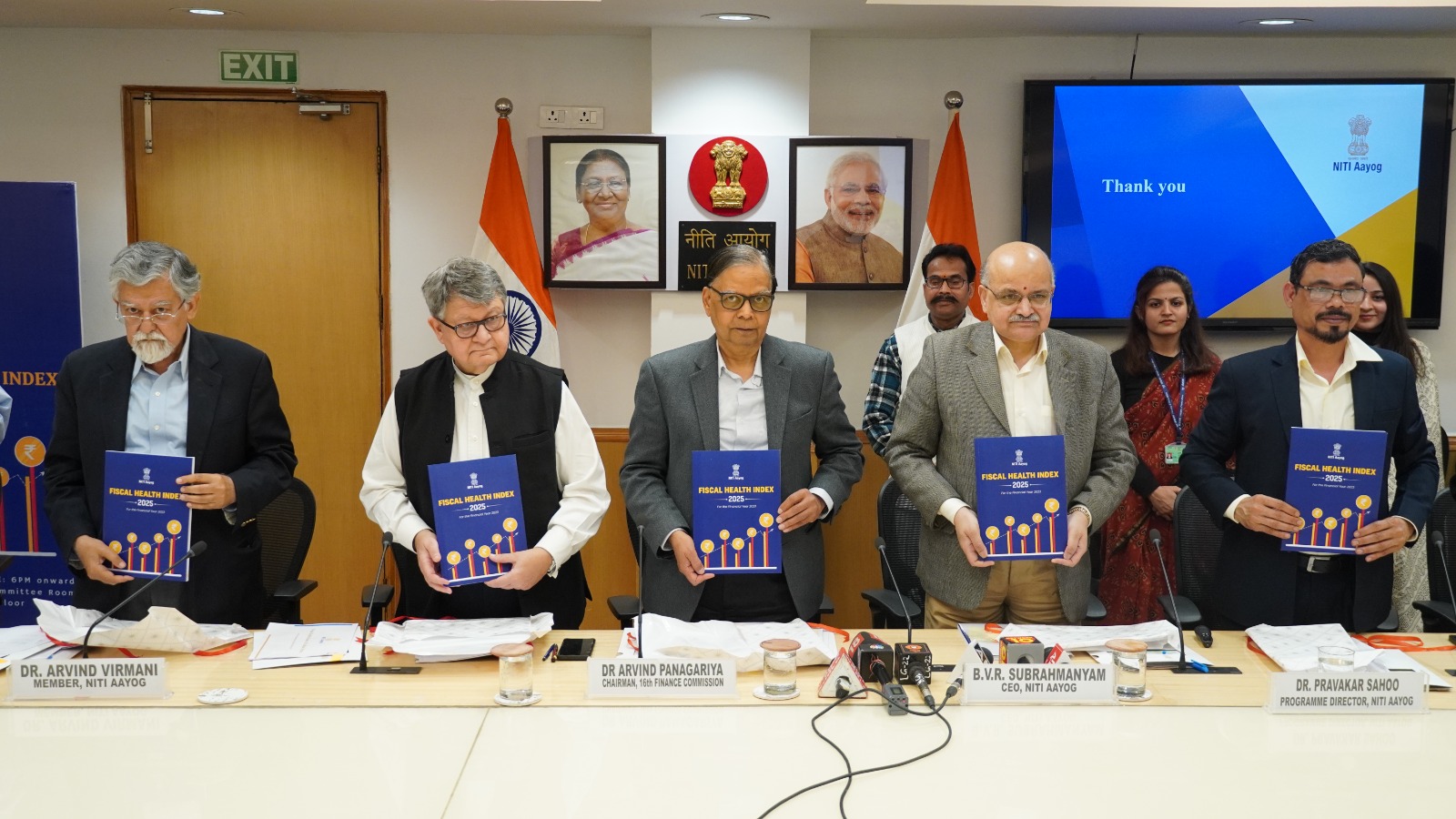
Dr Panagariya highlighted the report’s role in guiding states toward balanced regional development and prudent fiscal governance. He noted that the FHI provides a systematic approach to measuring fiscal performance and broader fiscal trends across the nation.
Vice Chairman Suman Bery emphasised that the FHI serves as a roadmap for fiscal consolidation, transparency, and effective resource management, aiming to improve states’ financial health through key fiscal indicators. CEO BVR Subrahmanyam stressed the report’s importance in fostering informed policy decisions and healthy competition among states, aligned with India’s vision of “Viksit Bharat @2047.”
Dr Virmani commended the report’s focus on cooperative federalism, promoting collaboration between the Centre and states to address regional disparities and drive holistic development.
The Fiscal Health Index aims to support policymakers with actionable insights and strategies to strengthen fiscal resilience and ensure sustainable economic progress.
The full report can be accessed at: https://www.niti.gov.in/sites/default/files/2025-01/Fiscal_Health_Index_24012025_Final.pdf