


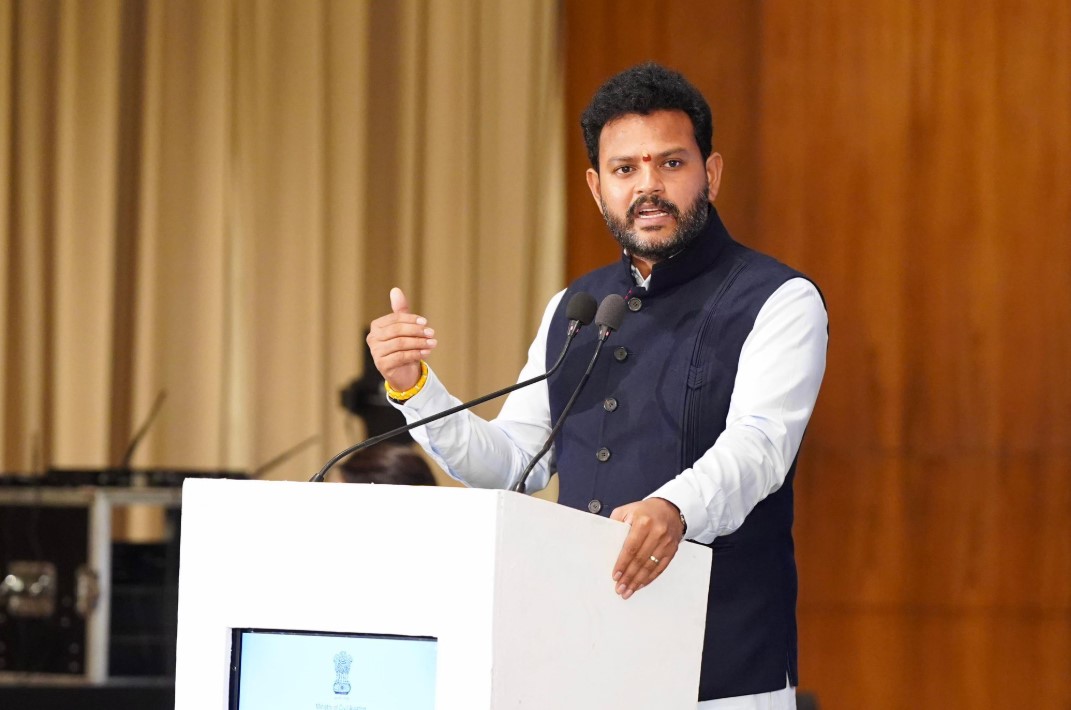
New Delhi: Union Civil Aviation Minister Ram Mohan Naidu has declared Sustainable Aviation Fuel (SAF) as a “practical and immediate solution” to decarbonise India’s aviation sector, stressing its potential to reduce lifecycle carbon emissions by up to 80% compared to conventional fuels.
He was speaking at the launch of the Sustainable Aviation Fuel Feasibility Study for India, released in New Delhi by the Ministry of Civil Aviation in partnership with the International Civil Aviation Organization (ICAO) and supported by the European Union. The study, part of ICAO’s ACT-SAF Programme, evaluates India’s capacity to produce and use drop-in SAF, examining feedstock availability, production pathways, infrastructure readiness and enabling policy conditions.
Naidu outlined India’s ambitious blending targets—1% by 2027, 2% by 2028 and 5% by 2030—aligned with global commitments under the CORSIA mandate. He emphasised that India’s vast resources, including 750 million metric tonnes of biomass and 230 million metric tonnes of surplus agricultural residue, provide both self-sufficiency and export potential.
Key milestones already achieved include the certification of Indian Oil Corporation’s Panipat Refinery as the country’s first SAF producer and the designation of COTECNA Inspection India Pvt. Ltd. as India’s first SAF certification body. Naidu said these steps will not only cut crude imports and emissions by up to 25 million tonnes annually but also raise farmers’ incomes by creating a new value chain for agricultural residue.
The Minister reaffirmed India’s commitment to positioning itself as a global leader in green aviation, adding: “Under the visionary leadership of Prime Minister Narendra Modi, India is on track to become the world’s largest domestic aviation market.”
Civil Aviation Secretary Samir Kumar Sinha highlighted that India already operates one of the youngest and most fuel-efficient aircraft fleets, with 88 airports running entirely on green energy. He stressed that global warming requires collective action and reiterated India’s alignment with the UNFCCC framework.
Director General of Civil Aviation Faiz Ahmed noted India’s rapid aviation growth, with passenger traffic projected to double to 500 million by 2030. He said the SAF Feasibility Study would help shape India’s national SAF policy framework, ensuring sustainability underpins future growth.
The study is being deliberated at a two-day workshop at Udaan Bhawan, drawing participation from ICAO, EASA, DGCA, industry stakeholders and government departments—reflecting a comprehensive, whole-of-government approach to building a domestic SAF ecosystem.
With strong feedstock availability, emerging production capacity and policy momentum, India is positioning itself not just as an adopter but as a future global leader in Sustainable Aviation Fuel production and export.